


Estragon: What if his plane…
Vladimir: Who?
Estragon: Yes.
(Silence.)
Vladimir: (Imitates dramatic newsreel) “Godot killed in fiery crash, nothing to be done” — Is that it?
Estragon: What goes up…
Vladimir: We’ll demand answers. Reports, and so on. (Thinking.) We demand the black box!
Estragon: Black box?
Vladimir: Flight recorder. Indestructible. So they say.
(Silence.)
Estragon: They’re so smart, why not make the whole plane out of it?
Vladimir: Out of what?
Estragon: Black box.
Vladimir: Merciless, you are.
Estragon: Who?
(Silence.)
Vladimir: What about hanging ourselves?
Estragon: The runway is free to all.
Rap and Country
Today’s Facebook—like Zuckerberg’s public image, weathering into relative smoothness like a bad stone—betrays little of the website’s antic playfulness circa 2005, of writing on someone’s Facebook wall, the digital equivalent of a whiteboard hung on a dorm room door.
In the salad days of Facebook, the profile was king. There was no newsfeed; to browse Facebook was to browse profiles—and hope someone wrote on your wall. (The eventual demolition of Facebook walls, like the advent of the open-plan office, was not without controversy.)
Creating your profile was not dissimilar to filling out the Hinge questionnaire, although in cruder form—befitting the Zuckerberg era immortalized by Jessie Eisenberg in The Social Network: our clammy, lusty Machiavelli.
If you indicated that you were single, you were asked what you were “Interested in”; options included:
“Serious relationship”
“Dating”
“Random play” [!!]
“Whatever I can get” [There is no God but Allah and Muhammed is his prophet]
You were allowed to choose more than one. In our innocence, we did.
Being the pre-iPhone universe, photos were not yet the hegemonic medium for personality enactment. Instead, you answered open-ended prompts like “Favorite movies” and “Favorite music.”
A popular response to the latter was “Everything (except rap and country).” Like Tinder bios about loving The Office a decade later, this answer became common enough to attract parody—evolving, in the manner of Pokémon, into a meme.
Fast music
For the suburban paleface of the aughts, “Except rap and country” delimited the Goldilocks zone of conventional taste. Always improbable, the word “everything,” in this context, approached tragedy.
This is when Curtis Yarvin pops out of a manhole: “You said everything. That includes classical.” Curtis!
The consumer of culture seeks familiarity. I’ve tried getting into classical music, honestly I have. For my palette it is strange in a boring way. (Some of Chopin’s faster shit excepted.)
The average moviegoer likes Marvel movies. The film school student abjures them.
For the producer of culture, familiarity is lava. Its warmth may comfort, even inspire, but it cannot be touched. Blink-182 were asked if they considered their music to be pop-punk, which is like asking a horse if it considers its quantity of legs to be four. They instead said, “We like fast music.” This demurral I will never forget.
Convention is the death of creativity. To make art, to write, is to believe—or at least to pretend—that you have something new to say, or a new way to say it. Standing atop millennia of aesthetic geology, you say: “Rocks, merely.”
You are drawn to the lava of a particular genre bursting the surface; still, deep down, part of you believes you could do it better. “Lava? Hot rocks, merely.”1
This egomania is a posture; like Hamlet’s madness it is both feigned and real. Like a diver with their hands on their thighs, standing at the end of the board, the posture is, ironically, a convention—yet a useful one, even necessary. A springboard into mystery. To clamber up the tower asks not fearlessness—far from it. To climb is horror itself. What’s asked of you is courage. Usually, I fail. Best case scenario, you cultivate a perverse affection for the panic.
Voting with their wallets
Political commentators talk about the Overton window: the field of feasible policy. It asks simply: Is Proposal X realistic?

A decade ago, student debt forgiveness was outside the Overton window—a quixotic goal. Protestors, activists, and writers clamored nonetheless; at times they enjoyed tailwinds of favorable events. The policy entered the window, first as “ambitious but unlikely”; now it has entered reality—imperfectly, as reality insists.
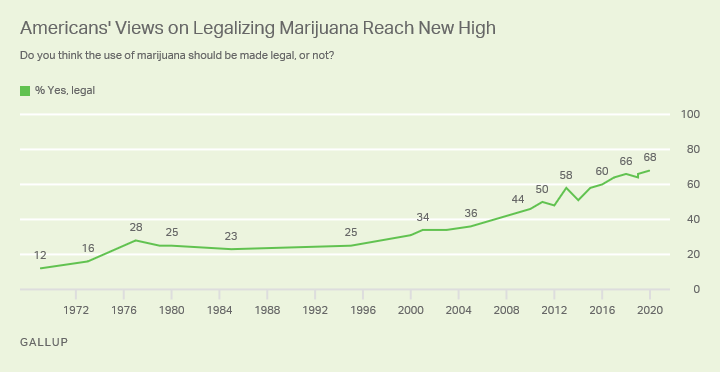
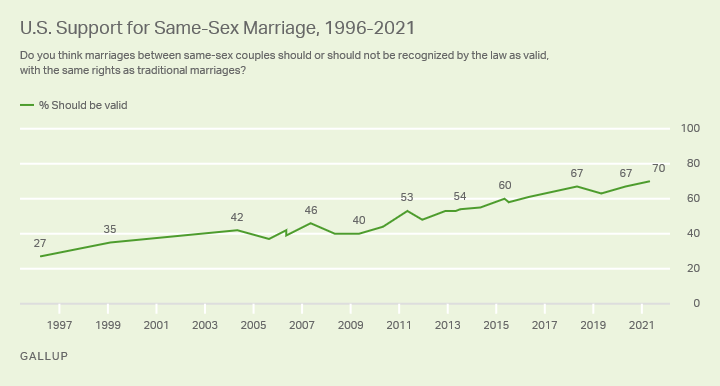
As late as 2000, “Legalize it, man” was largely stoner caricature, not serious politics. “Gay marriage,” for most, was an oxymoron.2 At the beginning of the 21st century, the idea of getting gay-married while legally stoned was mere comedy for the unenlightened majority—a world turned upside down, the zaniest-case-scenario of Y2K chaos. “Cats and dogs living together, mass hysteria.” (As David Ogilvy said, the best ideas begin as jokes.)
The Overton window, therefore, is the Venn diagram overlap of voter sentiment, lobbyist muscle, and government capacity. Politics, said Bismark, is the art of the possible.
Window shopping
TLDR: Consumers seek familiarity; producers seek to familiarize the unfamiliar. For artists and writers choosing art over money, the cultural Overton window of established genre is not a window but a brick wall—an obstacle. “Mainstream art” is an oxymoron; to torture an earlier metaphor, it is not lava but cold gravel.
Voters are predominantly consumers of politics, not producers. For them, familiarity is a feature, not a bug. Thus, elected politicians conventionally work within the Overton window—that is, when they work at all😃; an ambitious politician might work around the window’s edges. (Legislators elected via gerrymandering, and those at risk of challenge by primary—i.e., Congress—paradoxically find themselves placating the edges of the Overton window at the expense of the mainstream middle. This is the source of some of The Problems.)
Meanwhile, activists and political theorists work to move the window itself. Like a sports columnist insisting that the MLB strike zone is in the wrong place, or that umpires are enforcing it poorly, or that the NFL needs to take concussions more seriously, their efforts are typically fruitless, nearly futile.
Nearly, but merely nearly. “Never tell me the odds,” and so on.
This is why pollster Sean McElwee put “Overton window mover” in his Twitter bio—he played a large role in popularizing the proposal to “abolish ICE.”3 What better way to make a name for yourself than terraforming the landscape of possibility?
The hinterlands of fringe ideas are the very office of the sufficiently ambitious. One man’s conspiracy is another’s colloquium; you’re not an “outsider artist” once your art is in the Met. The Bastille won’t storm itself.
In Game of Thrones, Tyrion tells Daenerys that, no matter who’s on the throne, the wheel of power turns forever.
Danaerys, famously, has been mentally preparing for that comment since she was a baby dragon. “I will break the wheel,” she responds.
“Kind of a cool idea I think, right? A throne?” adds Curtis Yarvin, alive monarchist.
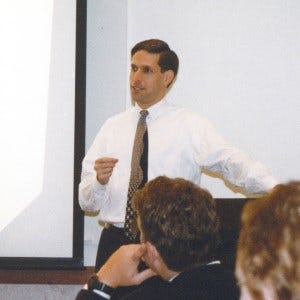
Guess who just learned the inventor of the term “Overton window”? It’s Alex! GUESS WHO INVENTED THE TERM? JOSEPH P. OVERTON. To my disbelief, I am not joking. MEET JOSEPH P. OVERTON:
“Sometimes there’s a man… I won’t say a hero—because what’s a hero? But sometimes there’s a man.”
Thank you for indulging my irregularity of late.
As God is my witness,
SEE YOU ON FRIDAY, DEAR FRIENDS.
Emerson: “For we are not pans and barrows, nor even porters of the fire and torch-bearers, but children of the fire, made of it, and only the same divinity transmuted, and at two or three removes, when we know least about it.”
Actually looking at these polls side by side is completely bananas. In 1996, support for gay marriage and legal weed was almost identical—something like 27% and 26%, respectively. By 2020, both had skyrocketed, but virtually in lockstep: 67% and 68%. Conventional wisdom INDEED
Apparently McElwee is becoming more pragmatic with age: he’s since come around to the “win elections by running on popular policies” camp.