


Hume-an after all
At the Kremlin, my pals’ off-campus house our senior year at Dartmouth, any incautious opinion risked penalization by the “Normative Claim Alarm.” (That sentence, by contrast, is a descriptive claim.) The alarm was not a literal alarm. It was, rather, a kicky catchphrase for irony-drunk humanities majors. (That sentence is probably normative🚨)
Years later I learned more about what the Soviet Union was actually like. I was embarrassed that I’d found it compelling, nearly intoxicating—the idea of naming a house after the headquarters of a totalitarian government.
Later still I learned more about the condition of peasants—and teachers, and doctors—under Soviet communism compared to what came after, and found myself worse off than ever: marooned in the uncanny valley of common ambivalence.
Cheap rent, guaranteed jobs, social services for all—what if the reds had been right all along, and their only error was… murdering millions of people? With special enmity reserved for (gulp) intellectuals?
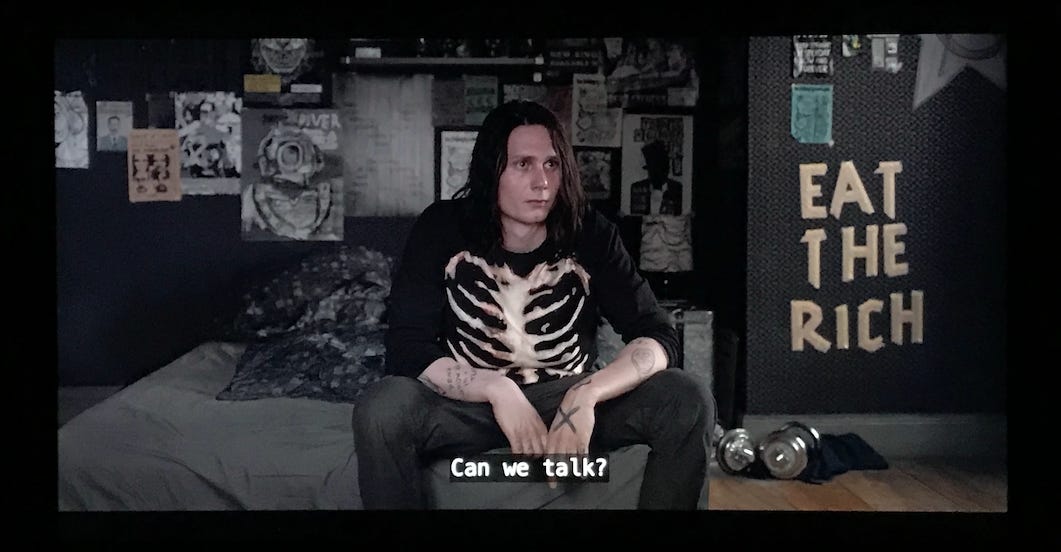
There is a spectre haunting Alex, and it’s the fact that I’m not cut out to be a revolutionary.
PURE VIBES
Thank you to everyone who has shared feedback on Available for Parties. (Especially the people I’ve failed to respond to in a timely manner, i.e., everyone.)
My favorite respondent reported, “The newsletters make me a little dizzy, like I am coked up scrolling through twitter and also listening to death metal (in a good way!)”
Another took a normative approach: “7.5 out of 10 stars. You weren’t asking for a star-rating? Too fucking bad!!” (This is known as a gentleman’s C.)
As for an elevator pitch, the great Max Read just published one for his own newsletter. It is so similar to my thinking—and so much more thoughtfully articulated—that I’m quoting it at length:
Write about stuff you’re obsessed with and make your readers not wish they were dead: OK, so, I don’t post super consistently, I’m not picking fights on Twitter, and I don’t have a clear value proposition or even really a “predictable content category” for the newsletter. What, then, does Read Max have to offer? This is where my theory of newsletters shifts from a relatively empirical analysis of what “works” and what doesn’t and into a pure-vibes philosophy of media. Basically, and I recognize how lame this sounds, I think people respond enthusiasm and joy. Readers want to learn stuff, and to be made to laugh, and to have their weird feelings articulated for them artfully, but, especially when it we’re talking about a publication that arrives in their email inboxes, they want to read something that sounds like it was written by and for living human beings. If you can stick to topics you’re genuinely interested in, and convey your obsession in even just a non-deadening manner, you are streets ahead of 99 percent of writing that exists online, and probably off it as well.
That’s one long elevator ride, you’re thinking. Max Read is way ahead of you, noting that his newsletter’s “scope [is] so inconsistent and broad that a description would only qualify as an elevator pitch on the Burj Kalifah.”
🥹🥹🥹
A guy can dream, okay?
SEE YOU NEXT FRIDAY, DEAR FRIENDS.
My god, if Available for Parties had an ombudsman