


Poetry is more than flowers and feelings.
Permit me to paraphrase:
Andrew Marvell, 1650: Someday we’ll die. Let’s sleep together. (“To His Coy Mistress”)
Aphra Behn, 1680: Total bummer—he was “unable to perform.” (“The Disappointment”)
T.S. Eliot feels neurotic at parties; Dante tells his haters exactly where they can go.1
Finally—to channel the late, great William Butler Yeats:
I don’t know who needs to hear this, but society is a dystopian dumpster fire.
What was described by the Guardian as “a touchstone in times of chaos,” “a kind of disaster movie for modern civilization,” and “a touchstone for anxious centrists”—all in the same article?
My first guess was Wings, the band. But it’s never Wings (the band).
It’s “The Second Coming,” by Yeats.
In the Times last month, columnist Margaret Renkl was having a bad time. Suffering from vertigo and despairing about politics, she lay in bed for days, “trying not to move my head and reciting to myself lines from ‘The Second Coming,’ a poem by the Irish poet William Butler Yeats.”
I’m not a doctor. But she picked the wrong poem. The beginning is practically a recipe for vertigo:
Turning and turning in the widening gyre …
Renkl’s otolaryngologist said her problem was rogue wax. But Yeats wasn’t helping.
“The Second Coming” is short but mighty, like a hedge fund manager. It’s as close to a blockbuster as poems get.
Few are the snippets of 20th century verse which are famous in the wider culture. Bits of Frost, Ginsberg, Angelou, Eliot, Dylan Thomas, Langston Hughes, a cameo from Larkin and we’re nearly there; maybe Roethke, maybe Brooks (Gwendolyn). Throw in today’s Yeats and we’re as good as finished. Here’s the first stanza:
Turning and turning in the widening gyre
The falcon cannot hear the falconer;
Things fall apart; the centre cannot hold;
Mere anarchy is loosed upon the world,
The blood-dimmed tide is loosed, and everywhere
The ceremony of innocence is drowned;
The best lack all conviction, while the worst
Are full of passionate intensity.
As the kids say: lots to unpack.
Renkl’s Times column quotes nearly the entirety of “The Second Coming.” Like a Scorsese action sequence soundtracked by the Rolling Stones, Yeats’ lines punctuate Renkl’s lamentations. And why not? This was before the midterm elections; there was much to fear.
The poem’s second stanza begins:
Surely some revelation is at hand;
Surely the Second Coming is at hand.
The Second Coming! Hardly are those words out
When a vast image out of Spiritus Mundi
Troubles my sight: somewhere in the sands of the desert
A shape with lion body and the head of a man,
A gaze blank and pitiless as the sun,
Is moving its slow thighs, while all about it
Reel shadows of the indignant desert birds.
The birds’ indignance is my favorite part.
Don’t worry about “Spiritus Mundi”; it sounds cool and is meaningless. That’s Yeats letting his woo flag fly. Here’s the rest of the stanza and the end of the poem:
The darkness drops again; but now I know
That twenty centuries of stony sleep
Were vexed to nightmare by a rocking cradle,
And what rough beast, its hour come round at last,
Slouches towards Bethlehem to be born?
First question. Whaddya mean “what rough beast?” Like, other than the manticore you just specifically described? That guy sounded reasonably rough. Got those thighs (slow). Maybe if you’d described the beast in pig Latin, Yeats, you could’ve sustained the mystery.
OR—omg. “To be born.” What if the man–lion is pregnant? What if this is an absolute Junior situation (1994)?

While Renkl’s Yeats-themed column quotes “The Second Coming” extensively, she does not include “Spiritus Mundi” or thighs, denuding the poem of its idiosyncrasies. Yet her edits are in the spirit of Yeats’ own. As the Guardian notes:
Early drafts of the poem illustrate Yeats’s dedication to universalising his message, as he deletes specific references to the French Revolution and the first world war and replaces terrestrial images of judges and tyrants with figures from dreams and myths …
Tyrants, you say? The poem contains only a handful of “figures”; the manticore, then, is likely to stand in for the tyrants slash judges.
… This “productive vagueness”, says David Dwan, an associate professor of English at Oxford University, is what makes the poem ever-relevant.
It’s especially relevant if you’re a falconer, the one figure Yeats was hellbent on preserving. Guy must’ve been apeshit for falconry. Falconus Mundi, bingo bango, friendship is magic. (With falcons.)
And yet—the poem is ever-relevant. Renkl’s column is only the latest proof.
Yeats wrote “The Second Coming” in 1919, publishing it the following year. For a few decades thereafter, things for real fell apart as World War II dwarfed its predecessor; events were sensational enough without a poem’s help.
[The poem] did not attain what Dwan calls its “problematic ubiquity” until some time after the second world war.
By the mid 50s, people could stand a little razzle dazzle.
Chinua Achebe’s Things Fall Apart (1958) enshrined it in the vocabulary of African independence. By 1971, the Guardian observed, the title had become “an African catchphrase”. Joan Didion’s essay collection Slouching Towards Bethlehem (1968) had a similar effect in the US at a time of stomach-churning flux.
That’s us!
After Achebe and Didion, lines from the poem popped up with growing frequency in coverage of China, India, Africa, Indonesia, Northern Ireland and Britain. There was apparently no geopolitical drama to which it could not be applied.
Teapot Dome: Things Fell Apart! Give me an A in AP American History. Give it to me!
In 2007, after the Brookings Institute called its report on Iraq “Things Fall Apart”, the New York Times claimed: “The Second Coming is fast becoming the official poem of the Iraq War.”
You can bet the Times headline for that article was “Apart, Things Fall.”
You could find similar claims being made regarding the financial crisis, the Arab Spring and, now, the age of rightwing populism.
Don’t forget Margaret Renkl’s earwax. Her column explains:
At the otolaryngologist’s office, the source of my torture finally emerged after half an hour of patient manipulations by a doctor wielding tiny power tools. In the newly stationary room, I looked at it, amazed. How fragile the human body is that it can be thrown into chaos by something so small!
New paragraph.
The same can be said for the body politic.
To quote Ben Stiller in Dodgeball: It’s a metaphor.
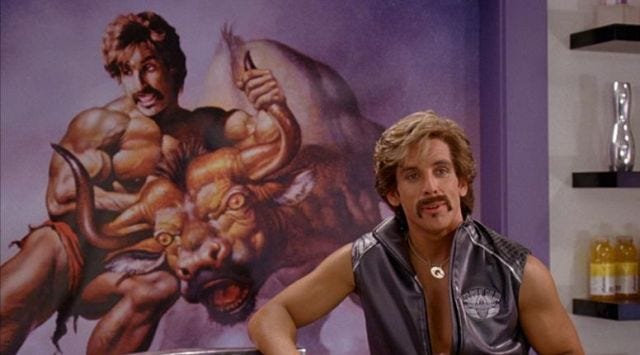
Here’s a new poem by me:
Thrown into chaos by something so small!
If you can dodge a wrench, you can dodge a ball.
The poem is called “My other car is a falconer.” I’m big on collage.
Wellness check
You okay, Yeats? How are you, buddy.
Yeats began “The Second Coming” during the tense, eventful month of January 1919. The first world war was barely over and the Russian Revolution, which dismayed him, still unfolding, while another war was brewing on his doorstep. On 21 January, the revolutionary Irish parliament met in Dublin to declare independence while, in a quarry in Tipperary, members of the IRA killed two officers of the Royal Irish Constabulary. The birth of Yeats’s daughter, Anne, in February was also freighted with danger. During her pregnancy, his young wife Georgie Hyde-Lees had been stricken by the Spanish flu that was burning through Europe. Events conspired to put Yeats in an apocalyptic frame of mind.
Pandemic—check. Scary newspapers—check. Vibes? Check.
A shape with lion body and the head of a man
Think how easily this line could have been shorter: simply, “With lion body and the head of a man.”
What’s “a shape” doing?
I think “a shape” is bringing us into the nightmare, and brilliantly. It’s a verbal Rorschach, a fear funnel, a dark basement. The threatening generality of “a shape” casts a lasting shadow, even as it’s followed by specifics. Earlier I made fun of Yeats for ending the poem with a question that pretends the rough beast hasn’t already been identified—but I’ve known this poem a long time, and the truth is I never noticed that ambiguity (redundancy?) until this week.
Plus, that ending is great. You can’t end on a manticore, that’s poems 101.
If we follow the logic of “nightmare,” the mystery that closes the poem could almost be Yeats waking up, half-remembering the figure’s shape, and us with him.
—Could almost, and isn’t. Because the poem’s “nightmare” belongs not to the poet but to “twenty centuries of stony sleep.” Because the nightmare is the beast’s.
O judgment! Thou art fled to brutish beasts
I come neither to bury Yeats nor to praise him.
Let’s be real: had the midterms gone the other way, I wouldn’t be the one laughing all the way to the opposite-bank.
I’m probably being unfair to Margaret Renkl.
I probably feel territorial about poetry.
And I’m probably being unfair to Yeats.
“Spiritus Mundi”—Universal Spirit—it isn’t meaningless-meaningless. Norton informs me Yeats meant something like “collective unconscious.” Okay!
Yeats says the beast is having nightmares. And Yeats, they say, is an honorable man.
But the collective is in the eye of the beholder.
If androids dream of electric sheep, what does Yeats’ beast dream of? If this beast is half lion and half man, which half is having the nightmare?
Marc Antony says “The evil that men do lives after them” and “the good is oft interred with their bones.” What happens when the bones wake up?
MERRY XMAS EVE.
SEE YOU FRIDAY, DEAR FRIENDS—and sooner, as I catch up with my cadence and deliver PART TWO.
Dante’s vision of Hell, the Inferno, was the greatest sublimation of resentment in history until Michael Jordan picked up a basketball.